Important Disclosure: Tour My Corbett is an independent travel assistance and booking facilitation service operated under the trade name JIM CORBETT ONLINE. We are not affiliated with, endorsed by, authorized by, or representing the Uttarakhand Forest Department, Corbett Tiger Reserve, Jim Corbett National Park, Government of Uttarakhand, Government of India, or any government authority. Safari permits, forest lodge reservations, and related travel services are subject to availability, applicable regulations, and approval by the relevant authorities or service providers.
Corbett National Park, with its vast geographical expanse, diverse physical features, and varied climatic conditions, hosts one of the richest and most varied ecological landscapes in India. This diversity gives rise to multiple distinct habitats and ecosystems, each supporting unique communities of flora and fauna. As you explore Corbett, you witness this remarkable interplay of nature’s elements, creating a living mosaic of life.
Mountain Ecosystem
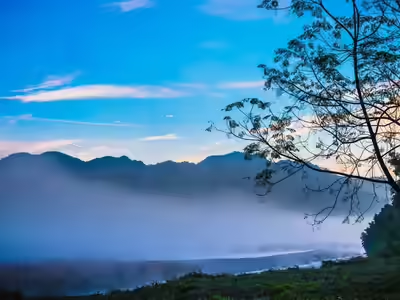
Mountains, formed by tectonic forces, rise prominently above surrounding lands and present a complex array of habitats shaped by changes in altitude, temperature, and sunlight. The foothills of the Himalayas around Corbett display a characteristic gradient of vegetation: broadleaf forests flourish at lower altitudes, while higher elevations support coniferous trees such as pine and oak.
In Corbett, this transition is evident — the lower regions are dominated by dense Sal forests, while as you ascend, mixed forests of Chir Pine, Oak, and Rhododendron take over. This elevational diversity supports a range of wildlife adapted to different microclimates and conditions.
Sal Forests
Sal (Shorea robusta) forests form the backbone of Corbett’s ecosystem. These majestic trees create dense canopies and provide shelter and food for many animals, including tigers, leopards, elephants, and various bird species. Sal forests are primarily found in areas such as Panod Nallah, Amgadi Sot, Sajgadi Sot, Gajar Sot, Sultan, Dhikala, Khinanauli, Bijrani, and Mailani within the park.
Khair-Sissoo Riverine Forests
Along the banks of the Ramganga and other rivers, Corbett hosts distinct Khair (Acacia catechu) and Sissoo (Dalbergia sissoo) forests. These grow on sandy, gravelly soils and form crucial habitats supporting diverse aquatic and terrestrial wildlife. The riverine forests are vital for maintaining the park’s ecological balance.
Chaurs – The Unique Grassland Wetlands
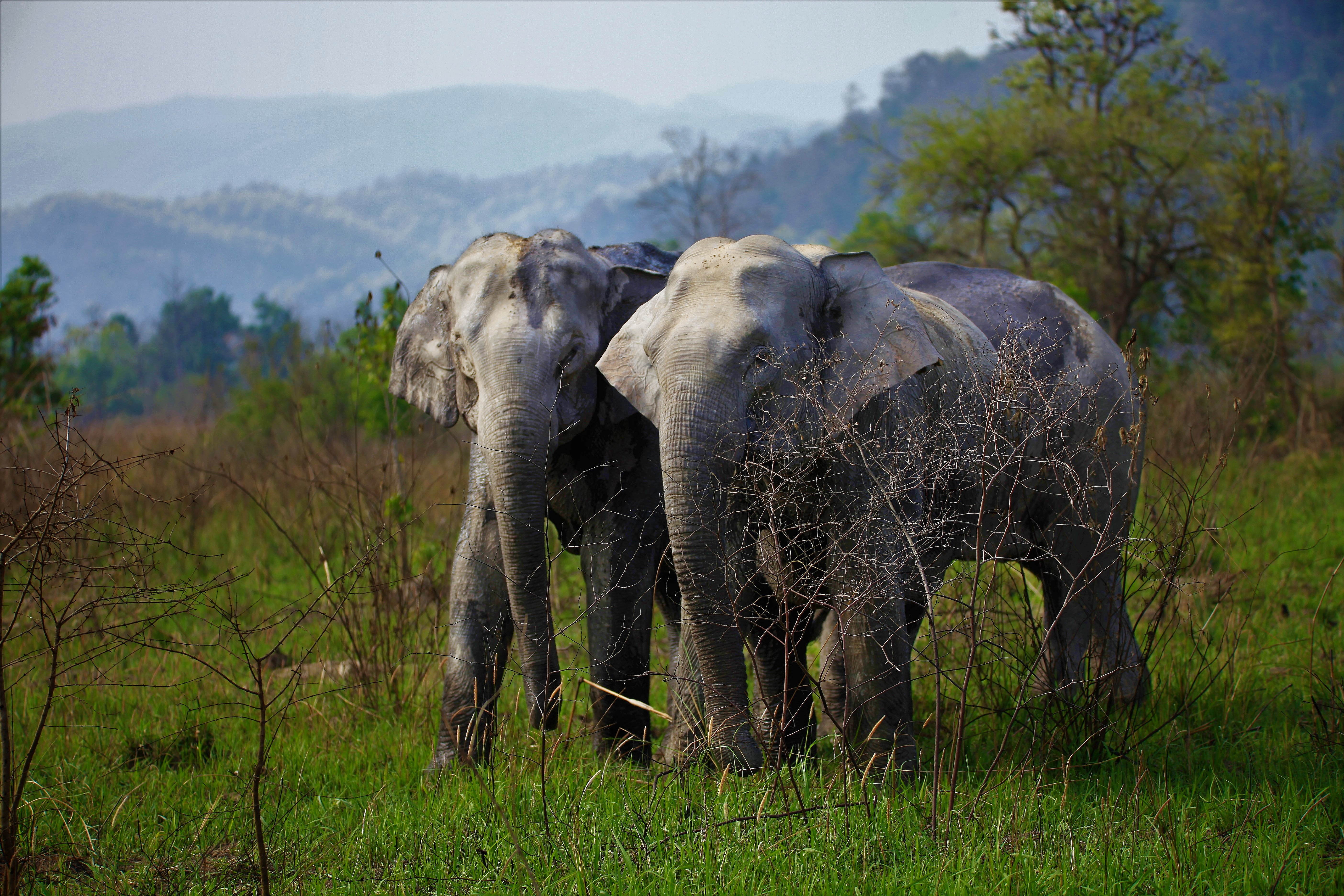
‘Chaurs’ are distinctive grassland wetlands within Corbett, essential as wildlife habitats and historically used for agriculture. Patil Dun is the largest chaur, with other important ones at Dhikala, Bijrani, Phulai, Khinanuli, Paterpani, and Mohanpani. These lush open areas attract herbivores such as deer and elephants, especially during dry seasons.
Bamboo Forests
Certain parts of Corbett are dominated by dense bamboo thickets, primarily consisting of Male Bamboo species. These clusters with their stout, shiny stems add another layer of diversity, providing shelter and food for many species, including elephants and smaller mammals.
Terai Grasslands
The Terai region within Corbett is a vast expanse of fertile grasslands rich in various grass species. This habitat is crucial for large herbivores like deer, wild boar, and elephants, which graze here extensively. The Terai grasslands form a vital component of the park’s food web.
Mixed Deciduous & Riverine Forests
Corbett also supports mixed deciduous forests, which blend species like Sal, Khair, Semal, and Rohini. Along the park’s many rivers — including the Ramganga, Kosi, and Sonanadi — riverine forests flourish, consisting of fig, jamun, mahua, and other moisture-loving trees. These forests harbor an array of mammals, reptiles, and birds, contributing to the park’s rich biodiversity.
High Altitude Ecosystems & Wetlands
Stretching into the Himalayan foothills, Corbett encompasses high-altitude ecosystems featuring temperate forests and alpine meadows, home to specialized wildlife such as the Himalayan black bear. The park’s wetlands — lakes, marshes, and swamps — play an essential role in sustaining the park’s ecology, serving as breeding grounds for amphibians, reptiles, and waterfowl.
Rich Biodiversity Supported by Diverse Habitats
The incredible variety of habitats across Corbett National Park supports a wealth of wildlife. The park is renowned for its population of Royal Bengal Tigers, but it is also home to elephants, leopards, sloth bears, deer species, and countless birds. Reptiles, amphibians, and numerous insects further enrich this ecosystem, making Corbett a vital conservation area and a paradise for wildlife enthusiasts and nature lovers alike.
Conservation and Challenges
Historically, Corbett’s tiger population faced severe declines due to deforestation, hunting, and habitat loss. However, with focused conservation efforts and protected status, the park remains a vital sanctuary where these majestic animals and many others thrive in their natural habitats. Corbett National Park is a testament to nature’s resilience and diversity, where multiple ecosystems coexist, creating a vibrant and ever-changing landscape. Exploring these habitats offers a unique opportunity to connect with wildlife and understand the delicate balance of life in the Himalayan foothills.
Disclaimer :
Tour My Corbett is a travel brand operated by Jim Corbett Online. We provide independent safari booking assistance and travel-related services. We are not affiliated with, endorsed by, authorized by, or representing Jim Corbett National Park, Corbett Tiger Reserve, the Forest Department, the Government of Uttarakhand, or any government authority. Safari permits, zone allocations, and guide assignments are subject to the rules, availability, and approval process of the concerned authorities.